tbd…
-Danielle
saylem m. celeste (they/them) is an archivist, artist-musician, community organizer, and writer originating from the west side of Detroit, Michigan. They have compiled a 10+ year interdisciplinary career in Arts and Culture within Detroit and amongst a national community of Black feminists, abolitionists, underground musicians, care workers, and other groups of people necessary for intersectional and progressive sub-cultures to change our larger cultures into dynamic ecosystems. saylem stewards Blue Moon Radio and Midnight Care Collective: two Detroit-based, grassroots organizations that center music and creative experimentation. In their spare time, they volunteer in the archive at Exhibit 3000, the world’s first Techno museum, quilt in the style of the Black south, and experiment with somatic outlets such as making Techno music and self publication through zine-making.
Danielle Francisca is one half of Nox Library.
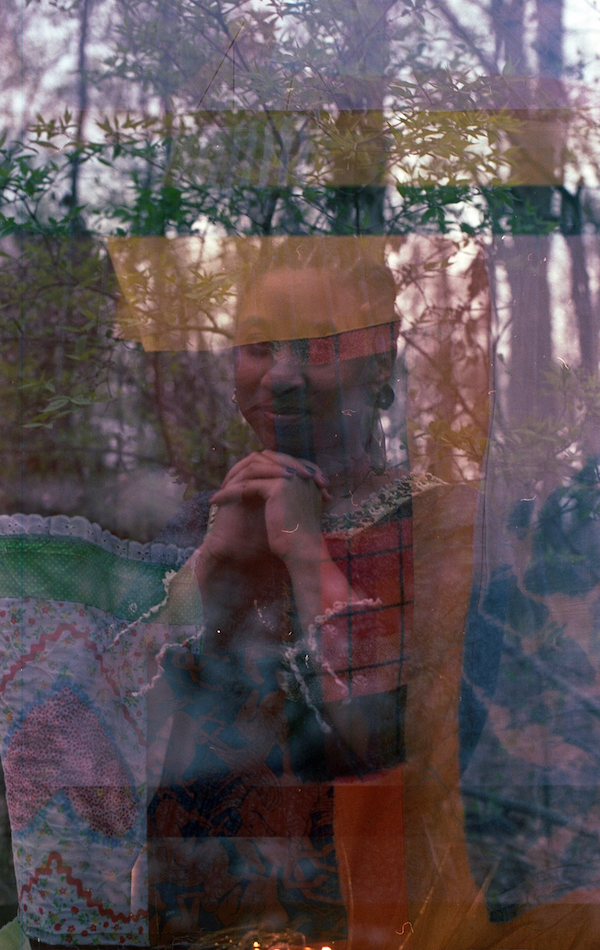
Photo courtesy of saylem.
Conversation with saylem celeste, october 2026 (Transcript)
saylem celeste: How are you?
Danielle Francisca: I'm good. I had quite a busy weekend, but I don't feel too tired today, which is a miracle. How about you? How have you been recently?
SC: I'm doing alright. I’ve been open to the transition of seasons, and the natural wind-down of our creative time. I feel like in Detroit, May through September is, and the rest of the year is not. I think I'm fully adjusting to not having as much to do.
DF: I especially feel like that's true for music. Even as someone who just engages with music but doesn't make it, I notice that there's so much more to engage with in the summertime, like you mentioned. How do you feel like that impacts your projects, including Blue Moon Radio?
SC: I feel like (the off season is) a really good opportunity to…It's a natural reflection time. I feel like this time of year, specifically September, is almost like my reset or restart for the year. We typically have a lot more intentional engagements in the off-season, which is really nice, so we tend to do a lot more (work to set up) community collaborations, or, what I call, “pair-downs,” which is the actual time that you take to get to know people within your community so that you can collaborate effectively with them. Instead of just going to their events, you need to actually build relationships.
How I think about it is deciding what projects or interests are right for the coming seasons. It's kind of how people treat January or the beginning of the year. For me, I feel like that's right now. I'm making my New Year's resolutions, but it's really just my new project resolutions.
DF: One of our first conversations, when I talked to you at Bulk Space, was because I was working on doing some digging on a few things for my essay for Sixty. Then there was something that you told me in another conversation that we had at Moondog Cafe; The opening of my essay, as it stands right now, is a quote from you, and it's when you told me about how people deserve better, but the system doesn't give a fuck. How does that sentiment come up in your collaborative projects? Not just Blue Moon Radio—I know you're also involved with a few other things.
SC: Someone gave a fuck about me. For me, honestly, it's been a lot of mentor-mentee roles. I necessarily haven't really had that structure in my traditional family structure. It's been a lot of chosen family, and people who have kind of either taken me on, or I've taken them on in different ways.
As there are more people who just give a fuck in general, they are able to reveal to others that you can actually have a practice and a part of your life where you give care, that it is within your capacity, because you're not so bogged down with so many simultaneous layers of oppression.
So, in saying that, the reason I try to put that as a core of my practice is because I feel, and have seen, the effects of underestimating how far giving a fuck about others can really go for you. As an organizer, I really feel that.
It's actually funny that we're talking about this right now, because I just got the transcript back from Will from earlier this year when we did a conversation at Moondog about the generative power of music and what it can do to organize and mobilize and fuel people. I actually believe that it's everybody's responsibility to instill a progressive attitude and radical action within their day-to-day lives, because that makes it easier to create a larger net of things like care.
I think that's a really powerful tool that I try to model as a creative here. It's been something that has been a part of my practice in the different projects that I do. Yes, I'm in a Black feminist collective, and yes, I do work with people who consider themselves to be radical, like radically militant musicians, but in these same ways, I feel like I've also been able to carry these values into just being a neighbor. If I see someone who needs some help, and it doesn't cost me anything…
Sometimes I'll see someone online be like, I'm looking for this thing. I'll be like, yo, you want this sewing machine, you want this thing? It has no use to me, but it could be everything to somebody else.
I think there is a little bit of a danger, though, when it does come to creatives having an unchecked level of altruism, and I think there's an even deeper conversation that can be had—if you're a Black femme person, or you're an immigrant, or you're disabled, or someone who is having a child—there is something to be said about how having an altruistic attitude historically has been a way to keep people oppressed. So I don't want to make it seem like being a good person is just the thing that you do. As someone who has progressive values and wants to see people break free from their oppression, you do, at the same time, have to have a level of inconvenience to be able to get into having an actual community, or an actual collaboration. There is a level of service done, obviously with consent, that I think is required to be a community steward or a leader when it comes to these different pursuits.
DF: Independence is important, but we shouldn't be so independent that we're expected to only take care of ourselves, or our immediate dependents. It really takes a village in order for us all to thrive. It takes a network and a community, and everyone servicing that community to get something from that community.
SC: I was talking to a friend in some really deep frustration a couple weeks ago, just going through some community relational issues, and while I was really angry, I was talking about how it takes a certain level of courage to be able to care. It takes a certain level of courage to care, because it takes a level of vulnerability and humility that is complex. There's a lot of icky, sticky shame and guilt around being a person that is compassionate and willing to do it badly and embarrassingly, which is, in my opinion, a lot of what artists do professionally, is just being bad at shit.
I think that in response to things like heroicism and idolatry, the response is to just be as close to you as you can be, while still being able to alchemize and synthesize your particular set of circumstances in the way you might respond to a given problem, or an ongoing question.
I feel very disappointed around the ways that people do not consider others, particularly disabled people, and how those questions and conversations are very much left out a lot of times in thinking about revolutions, because people don't really know what to do with us. In the same breath, it's really important to consider how that approach is also necessary to have its own unique response to the problem.
DF: I want to get to examples of what you're talking about, because you mentioned your practice and your values. What to you is your practice, and what are those values that you're referring to?
SC: Such a great question, because I feel like I'm constantly reinventing my answer to this question.
I really like making artifacts in time. I like to respond to care needs. This is essentially kind of the work that I do, so I think right now that looks a lot like creating space, and it looks like having conversations. It looks like making music and mixes, and I'm intrigued by this idea of leaving maps for people…
One of the greatest prompts, I think, is this thing that comes up a lot, “don't use the master's tools,” and I'm just like, okay, but what are the (other) tools, though? Are you actually using the tools? Are you actually thinking about things like music, which don't adhere to the power systems of language, which is really interesting and powerful in so many different ways? I think this is what I'm trying to say when it comes to my practice. I'm interested in exploring what it looks like for people to be able to have experiences around their memory, their culture, and their history; that don’t remove them from their context, but pull them deeper into their context.
Music has really allowed me to do that as a DJ in a way that I'm still figuring out. What does it mean to create that environment for people, where it's extremely evocative?
It's something that you don't have to have a crazy degree or some sort of training to be able to understand what it is that you're hearing. The simplest way that I describe my practice is: my practice is people. I'm very into the art of gathering. I think that it is a very powerful tool to be able to make and encourage connections between community members.
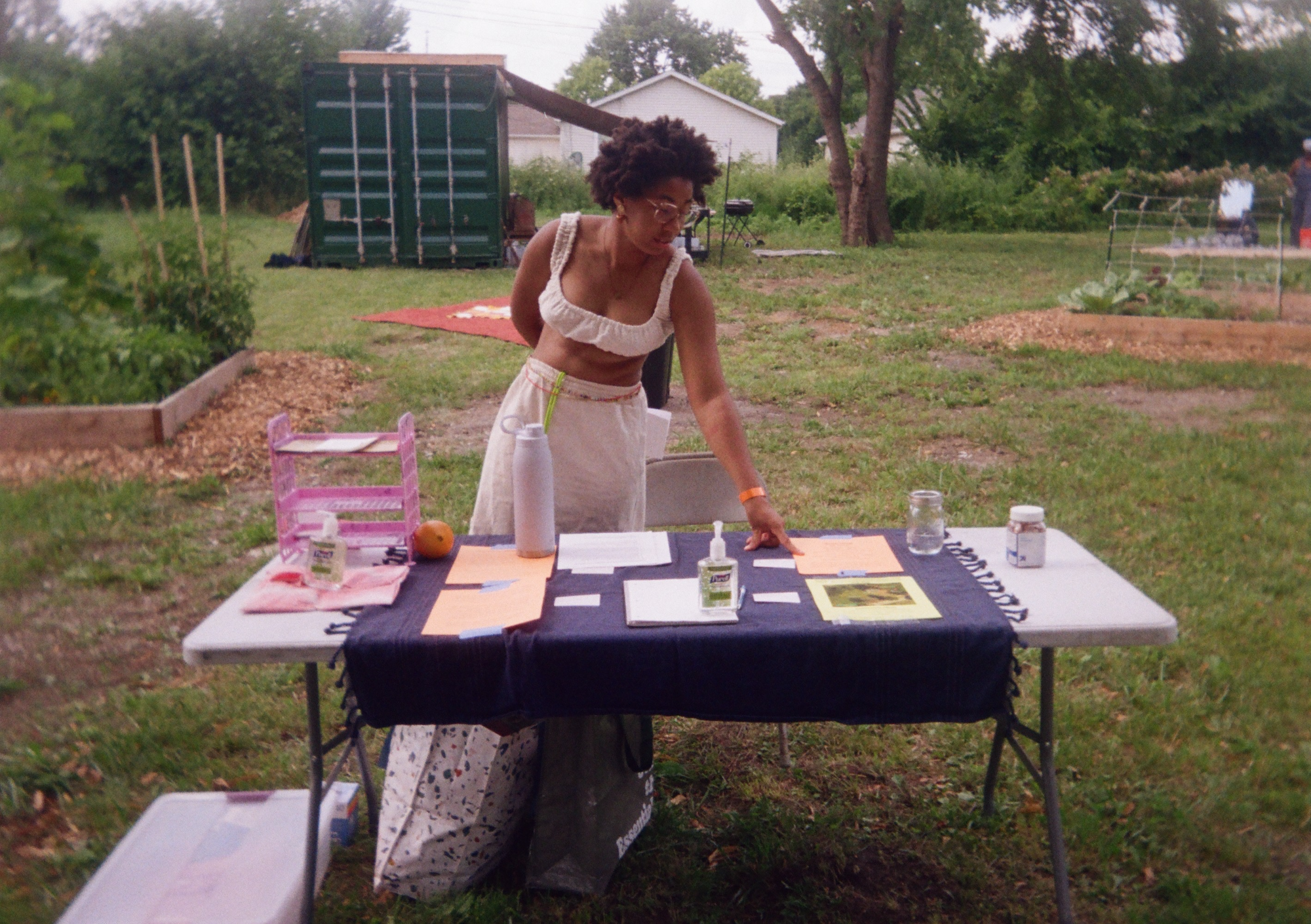
Photo courtesy of saylem
DF: When you make music, or when you're DJing an event, do you see that as a form of care?
SC: In the non-corny way, yes. It is cultural affirmation. Being a city where we deal with a ton of erasure—literally the razing of our physical history in so many different ways—I think that it's really important to leave trails or marks for people to find for them to get back to where they're at.
Over the years, I've been a quilter. That history is very visually, physically apparent there, of what quilts have been used for in the African American tradition. I think as I enter a new phase of not just being an organizer, but of also developing my own practice, it's looking like, how do I use sound to evoke the somatic? How do I use writing in a way to where it's not explicitly for an academic audience? In fact, how do I use writing in a way where it's for an anti-academic audience?
Which is where zine making has come more into play for me in recent years, and I'm really interested to see how I can leave pieces for people to make sense of what's going on around us on their own, so we can talk about it together. I want more people to know what did happen, and how we can all together be like, hmm, based off what we know, what has happened in this specific place… how can we unlock new forms of communication to be able to start to address these problems, even if it's just on a one-to-one scale. A change between two people is much more of a monumental win than no changes at all.
DF: That first conversation that we had at Bulk Space, when we were talking about alternatives to the prevailing arts and culture ecosystem, one thing I asked you was about what gaps you saw, or that you continue to see, in that ecosystem, that you would like to address, or that you hope your collaborative projects can address?
SC: As someone who came in and had a very intergenerational experience at 16, and now it being 10 years later—that unfortunately is not the experience that most people get to have.
DF: With the arts?
SC: Yeah, because originally I was going to school for painting, and I wanted to be in fine arts. But that's just on some, like, slave trade mimicry shit, so I was like, oh, we're off that, we're not doing that…
I decided to leave art school because I didn't like how deluded I had become by the idea that if I went to X art school and got X resources, then I could then bring them back. That is not something that happens. It's not how the system works. You become preoccupied with how you maintain your wealth, how you maintain your access to resources, and you completely forget about your community. I knew if I actually wanted to do something here in Detroit, I had to physically be here and lock down and find what kind of people I actually align with politically, mentally, emotionally, and experientially growing up in the city. For me, I think as a younger person, it had been chosen family.
I think that one of the largest gaps is that people don't have an in-between here. People really don't even have a start anymore, which is the transformation I've seen within the last couple years. At least pre-pandemic for me, there were a lot of emerging opportunities—which, also, “emerging”…how tricky are they with that shit? Because you could be emerging and be, like, 50 years old…it just means, do you know you're being exploited or not?
It used to be that you could get microgrants. There were emerging artist opportunities and it was much easier to be like, I want to have a show here, I want to connect with this person, I want to do a studio visit…
I don't really feel like that is an option for a lot of people to be able to build that intergenerational community now. What we're seeing, as late-stage capitalism progresses, is that people who have historically had access to resources, especially in small towns like this, they're not letting that shit go. They're gripping even harder onto their things, and it's becoming increasingly harder—at least for me and for other organizers who work intergenerationally—to encourage the people who have the resources to give them up until they are literally on the brink of losing everything, or on the brink of death, which is not something I feel small arts economies ever really had to deal with before. I say all that to say: a big part of why I have a lot of the projects that I have, is to initiate a point of connection, and to really be able to provide some sort of sandbox for people to have conversations and opportunities to creatively experiment. Opportunities to maybe have experiences that they may not have had access to if they didn't have access to the tools, so that they have something to feel like they are actually rooted and grounded in a place like Detroit, and they don't feel like everybody just left them out to the wind. That's not historically what this city has been, but unfortunately, it's the situation that we're in, and that's how a lot of people feel, even though that's not true.
I think it's really important to have these collectives, or like I said, sandbox spaces, or community landing pads, so you can have something to be able to grab onto in a place where the cultural fabric is constantly being shredded up, torn, thrown away, recycled—it's constantly in this state of instability, and has been for the past 60 years. People need to be able to know that they can land somewhere, and that it is at least emotionally safe for them. It could be somewhere where they could start to untangle the systemic knots that have been put on a lot of people who have gone through the experience of becoming a human. In the literal place where they developed automation and all these really terrible new ways to directly propel us into late-stage capitalism—how can we also be propelled beyond this template?
DF: A lot of what you're saying makes me think of alternative spaces, but not in the sense of, like…
SC: It's not in the corny third space way.
DF: A lot of this makes me think of what it means to preserve working-class cultural production, and not in the sense of oh, we're talking about blue-collar auto workers and the culture that they produce. In addition to that, we're talking generally about working-class people, anyone who is not a person who owns the means of production, and what art they produce that essentially creates the cultural fabric of Detroit. The importance of preserving that comes into play when we think about how the art market and the broader arts ecosystem is being increasingly more and more co-opted and controlled by the billionaires and the ruling class. They take what is produced by working-class people in working-class communities, and they bring it into the fold of their market economy, almost as though that's their understanding of what defines art. They don't assign significance to what is art and culture until it exists within their market-based art sphere.
When I think of alternative spaces, I'm thinking about those spaces which are not operating within that sphere, which refuse that billionaire control of the arts. What does it mean to have these alternative spaces that are genuinely meant to work against that destabilization of the cultural fabric of Detroit, which is inherently and historically has been working-class, or been built by the working class?
SC: Yep. You cannot control something you don't own, and I thoroughly believe that the cultural production that has happened in Detroit is something that you cannot own. It is not something to be owned. I think it's much in alignment with how we think about the land, or water, and stewarding the cultural landscape of a place is so much more important than me looking cool for thirty seconds.
DF: A hundred percent.
SC: Certain people do events here—they'll do panels, especially in techno, and they have secret funders, like Red Bull, or it'll be New Lab, or some crazy zio(nist) company, and it's like, oh, their thing was successful, but I'm like, yeah, but I know they got a 10K grant from these people. Or, Oh, it's cool, it's cutting edge, these are people that look like me that are doing this, but I'm like, these are actually cultural ops.
DF: That's a great way to put it.
SC: One thing I feel really proud about when it comes to Blue Moon—and you kind of touched on it perfectly in a way that I hadn't thought about before—is it's subverting the expectation. It's very difficult to run a radio station, but it's very hard to do this and make it look cool unless you already have all these means of production.
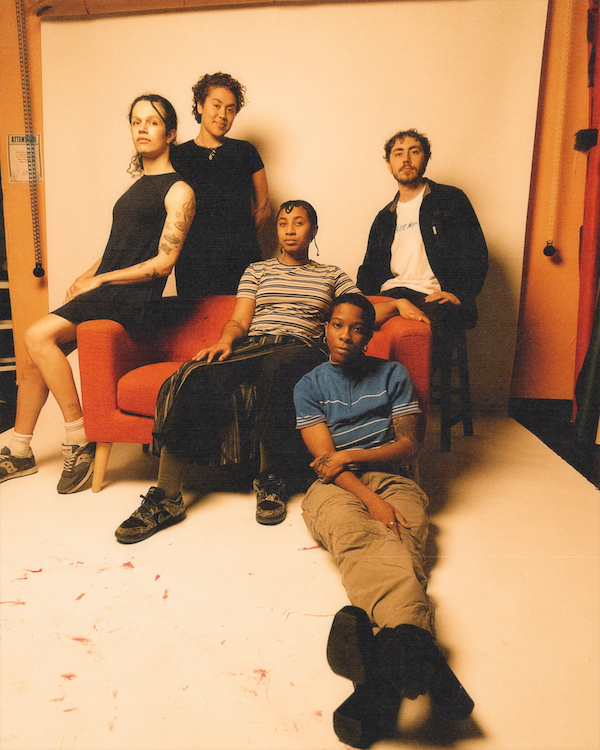
Organizers of Blue Moon Radio. Photo courtesy of saylem.
The way that they're gonna do it to serve the Zionist fascists, capitalists, whatever-the-fuck—there are people who are gonna do that, and that's fine, that's the way that they wanna do it. But I'm much more interested in using these types of communication technologies, and really focusing on providing this container around how people think about their care, how they think about their land, how they think about their relationship to their neighbor, or what they've experienced and their memory…it subverts these larger institutions' ability to say, this is the cool thing now, and we have it, so you guys should come and hang out with us. It's not about it being cool. It's about people having a way to express what the fuck is happening to them without them going crazy, because we also need that. It can't always be opulence. Struggle, historically, is the way that movement workers have explained the way they live. So many different experiences within life that allow people to remind them that they are living.
I'm glad you said that, because that's making me think, the purpose of all these projects is to remind people that you are living.
DF: Also to remind people that we are the cultural producers. It's not the Gilberts or Library Street Collective—we are the cultural producers.
When, you know, there could be these projects funded by millionaires and billionaires and corporations, which really are just a visual appeasement, or optics sort of thing—what these projects lack so much of is soul. You mentioned spirituality before, and I'm totally with you there, because when I look at these projects, or initiatives that are within the arts and culture sector of Detroit, so much of it lacks soul.
SC: That gets back into what I was talking about earlier, about how there is more than one, where the intellectual access point is not the only access point to be able to have well-rounded, detailed, ecstatic experiences.
Like you said, even the way that things are designed, the way that things are advertised, the way that things are experienced for people, those types of events and products—when I find myself at things like that, I don't even feel like I'm in Detroit anymore. I feel like I'm in New York, or like I'm in LA. I'm in somebody else's reality, and I actually just want to be in my reality.
DF: A reality that you share with other people.
SC: I don't want to be removed from how special that is, especially since they keep saying it's special anyway, but I don't want them to know how to replicate or steward that by any means. It's the uncaptured, and the idea of the uncaptured, and having that be a guiding light through creative projects is very important to me—the idea that there is something still left within everything that has been conquested, that makes it feel soulful, or human, or real. That is the thing that I'm interested in when it comes to music, arts, or creativity. There is something that you cannot exploit within our human experience.
DF: They will attempt to, but…
SC: People attempt to, but there is something that you cannot exploit within. I'm interested in how I can make a foundation and a floor so when someone wants to be able to have an experience where they can get a little bit closer to getting that, I can help them make that step, even if it's just in a little way.
End.
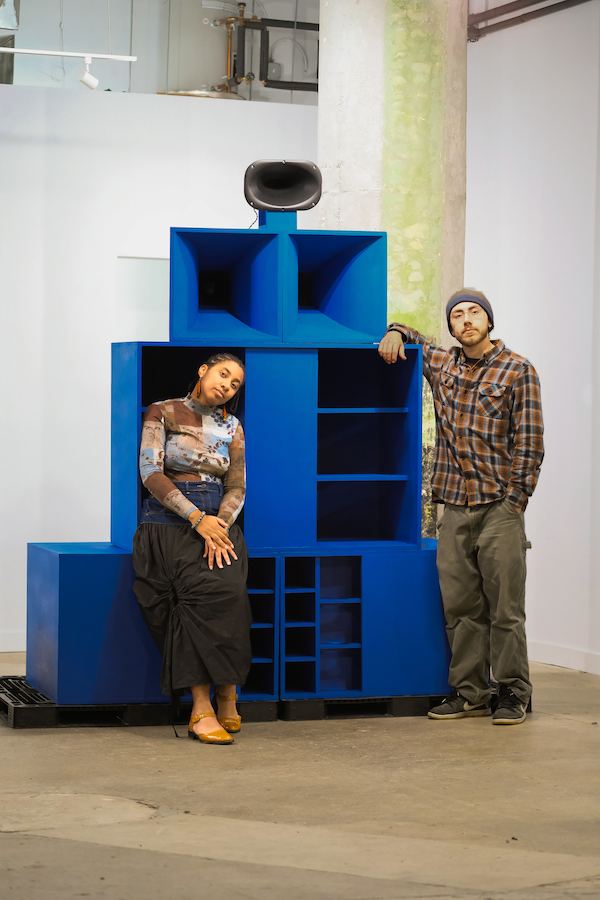
Angel Food Sound System. Photo courtesy of saylem.
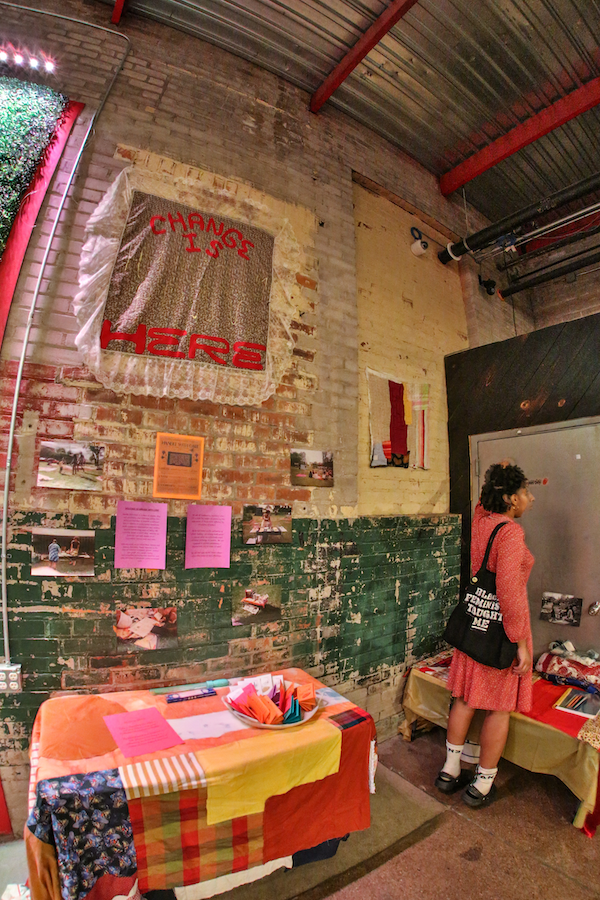
Photo courtesy of saylem.