Conversation 14: Lizzie Cooper
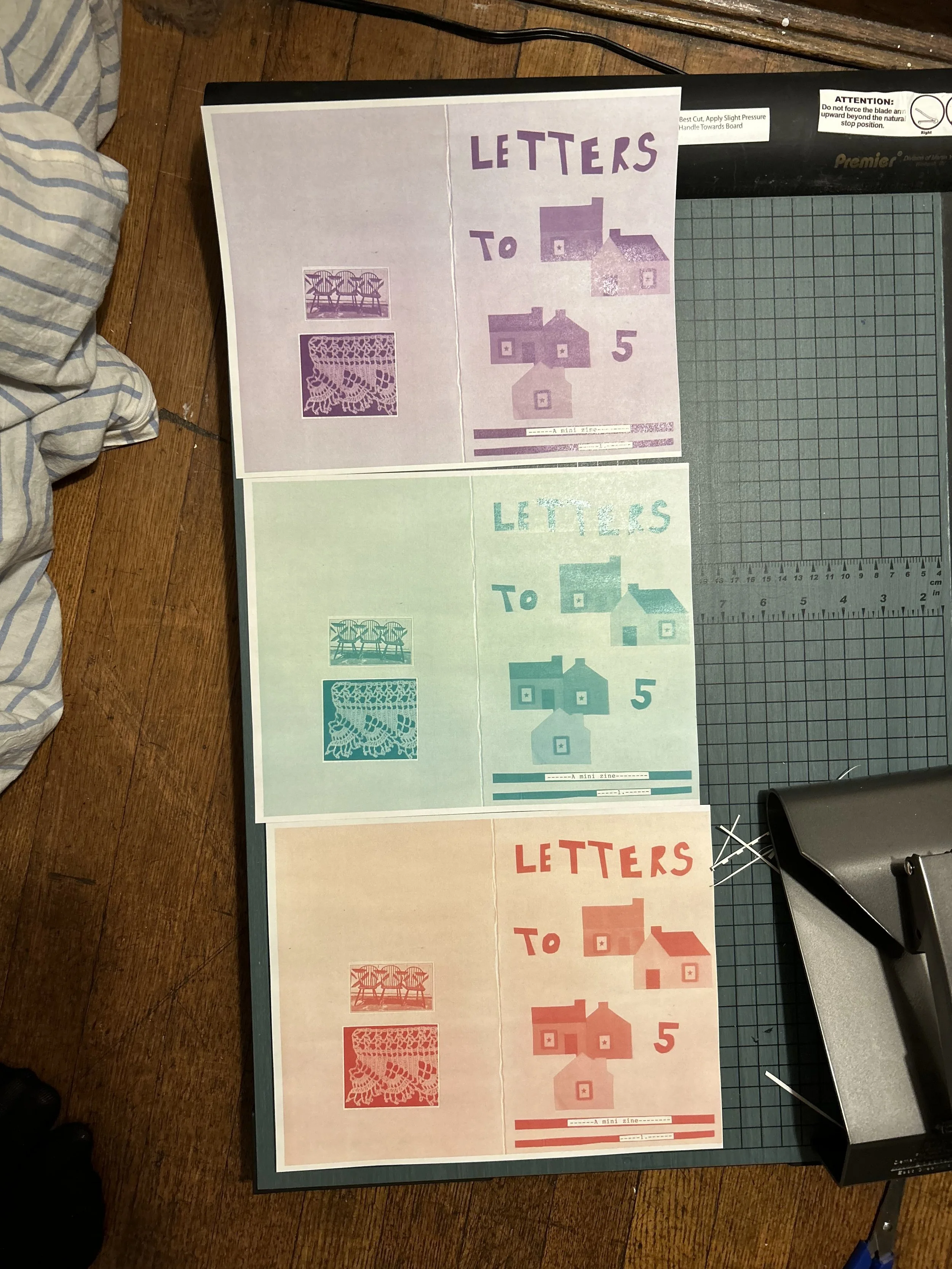
I met Lizzie in Texas when we bonded over the value of documenting interviews and conversations with artists. In between tours with her band, PARKiNG, and in addition to her photography practice, she compiles Test Patterns, a zine composed of interviews with musicians and artworks by peers. Building off the legacy of DIY zine making, Lizzie collages and draws each issue by hand, scans them, and prints them out wherever she has the means to (sometimes even at her fire-fighter dad’s station early in the morning). Test Patterns, like Nox Library, is an on-the-ground artist-run project which centers genuine connection. In an age where online influencers prevail and musicians feel inclined to worldcraft their own scene so they can make themselves the icon of something (think Charli Xcx, Brat summer, or similar), it’s refreshing to converse with someone who cares as deeply about honing their craft as much as they do about the legacy they’re building on and the broader community they are part of.
Culture comes from the bottom up. Ninety-nine percent of art comes from the working class before it is exploited and co-opted by the forces of monopoly capitalism. The musicians who keep music alive and human are the ones working day jobs—or multiple part-time jobs—to pay for their ability to create on top of the costs to survive. Despite their independence, some musicians have found their work in databases used to train AI, or they make less than a cent per song on a platform like Spotify which makes millions. In this cultural battle, we must work to reclaim what is ours. The documentation, preservation, and underground dissemination of art—and especially through DIY means—is one way to do that. In our conversation, Lizzie reflects on this process, what inspired her to get into it, and what she has learned from doing it.
In an introspective sense, we’re all still trying to figure out our place in the world. In a collective sense, sometimes that former concern can be satisfied with knowing what our place is when we stand alongside each other—to be with each other instead of setting ourselves apart from each other. Projects like Test Patterns showcase how artists need community in order to survive, and oftentimes the best art comes from artists that would rather serve that community than build a self-deifying practice to serve a mainstream, money-hungry machine.
– Danielle
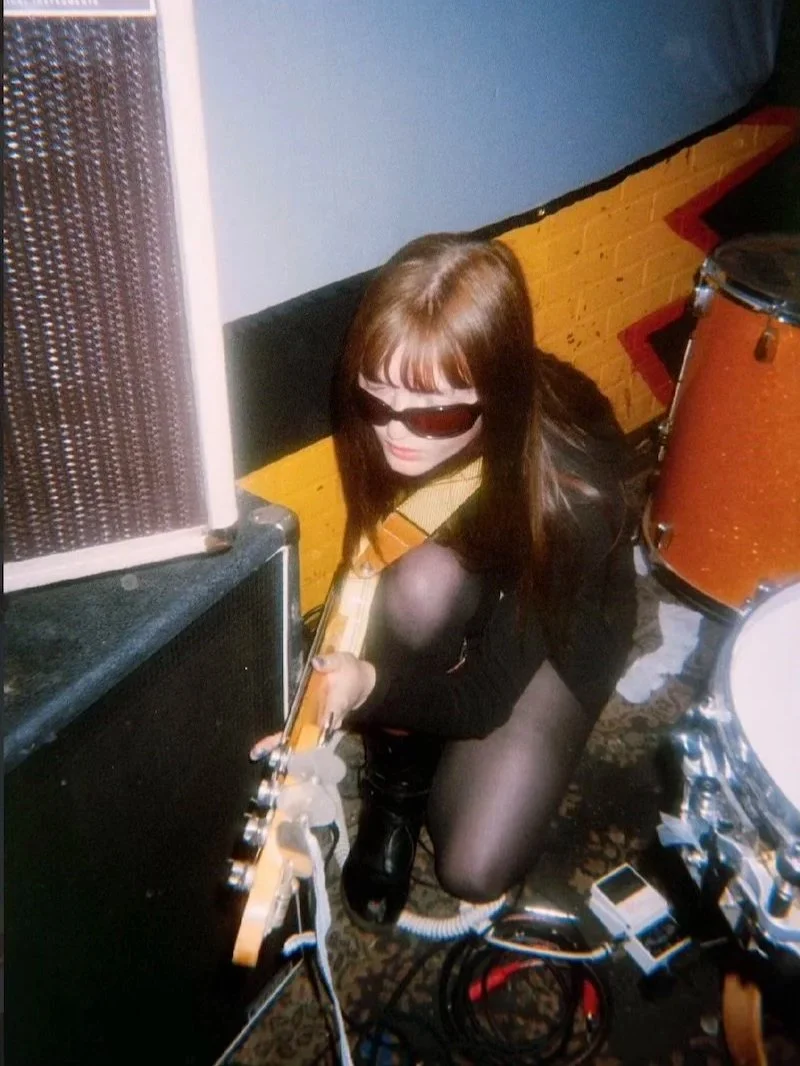
Lizzie Cooper is a Louisville, KY based photographer, creator of the DIY zine, Test Patterns, and musician (PARKiNG).
Danielle is one half of Nox Library.
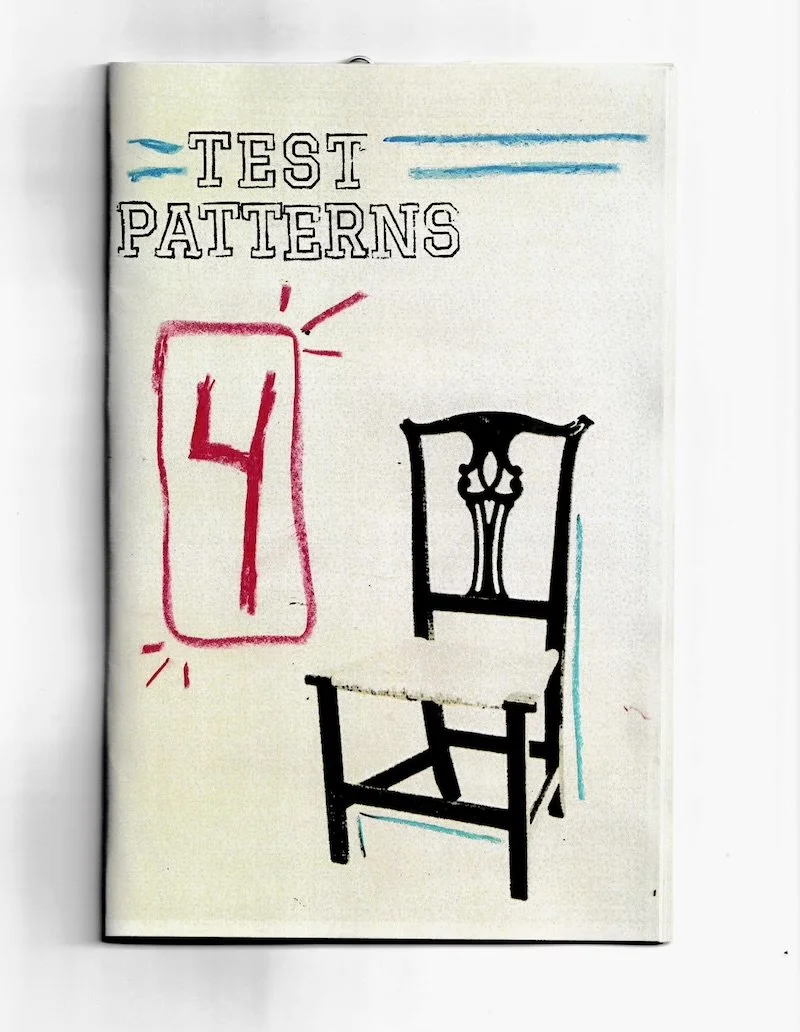
Test Patterns Issue 4, image courtesy of Lizzie. You can view a scanned copy of Issue 4 here.
Conversation with lizzie cooper, June 2026 (Transcript)
The following conversation was edited down for publication. Read the full conversation here with a bonus tour story.
Danielle Francisca: How are you? How's Louisville?
Lizzie Cooper: Ugh, it's been kind of crazy. I actually have been up since probably 5 this morning. I woke up to a crazy tornado thunderstorm.
DF: Oh, really?
LC: Yeah, I woke up to the sirens going off right next to my apartment, and I was like this is kinda crazy.
DF: Oh no…do you have a basement to go in?
LC: No, that's the scary part, is that my apartment complex does not have a basement.
DF: Oh my… Well, hopefully everything's okay, and that it's not happening.
LC: It was totally fine, but yeah, just like a crazy thunderstorm.
DF: Thanks for being down to do this conversation with me.
I'm gonna preface with the landscape of things, since we're recording: In general, we're all dependent on social media in so many ways. I was thinking about this because I think this creates something really complex for artists to navigate, and especially musicians, which is nothing new. Since the dawn of the digital age, it has been increasingly complex. With the introduction of AI and so forth, and how the algorithm is constantly changing—I think that this introduces something new in recent years…
What's quite unfortunate with artists and musicians that I've seen is that it has put this hyperfixation on brand building in a way that is super self-aggrandizing and which deifies oneself. On platforms like Instagram, it's so easy to build an image that really carries no substance with it, right? Because you're just building an image of oneself, or even doing that purely through social scenes, as opposed to building an actual community and connecting with people through music.
I noticed it when we were in Austin, and I notice it in Detroit. It's a weird phenomenon.
On the other side of that, there're a lot of artists that are authentic, that carry with them this rawness and humility in the sense that they know their place in the world, and they're dedicated to their craft in a way that is like they don't give a fuck about how cool they come off, or what clout they have. It's funny, because I was recently talking to someone about this, and he was like, yeah, that's punk. That sort of authenticity and humility, and not really centering oneself, or making a god of oneself in that way—that's punk.
Which I loved, because I'm so new to the punk world.
With that being said, I think about when I first met you, and we were in Austin, when you played that show with Zastava at Hole in the Wall.
LC: Yeah.
DF: PARKiNG's an incredible band, all great musicians, great music—you know I love you guys. But it was amazing to me to see you guys play and then afterwards I walked over to your merch table, and you had this little stack of zines called Test Patterns, which is a collection of interviews and other spotlights with different artists and other musicians and peers. I found it so endearing, and it's still endearing and valuable, because it was like…
You deserve all the recognition you get, but then, at your merch table, you're paying homage to all who came before you, your peers who are doing it next to you, and the legacy that you're building off of. It’s the opposite of self-aggrandizing. To me that's so genuine, and that's, like I said, really valuable.
What compelled you to embark on this project, and what is Test Patterns to you?
LC: When I first started getting into zines, I didn't have that phase of not knowing what it was and starting to get into it. I kind of grew up my whole life being super involved in reading them because both my parents were really involved in the punk and skate scenes in Louisville when they were growing up, and so my mom had a stack of zines in our house.
I remember looking through them all the time, and when I got to high school, I started getting really interested in collaging for photography assignments. I noticed that on a lot of the covers, and included in a lot of them, were these really cool art pieces and collages, and I was like, that's a really cool concept, I feel like that'd be really cool to get into.
It started purely as a way to make collages and to make art, so all my first zines are one-of-one just collage zines of things that I was making in high school. There’s one of French bands I liked in high school, one of all my friends… it purely started as just to get art assignments done in a way that I enjoyed. Then we would have art fairs every year, and I had the idea of making one-page zines and giving them out for free at my table. Inside of them, I would include bands that I liked, or movies I had watched, and I'd just pass them around to people. It started to become a thing that other people would start making them at art fair, and we'd kind of pass them around.
Yeah, it purely started as, honestly, part of my life—everything I did in high school up until my senior year, which is when I started going to shows, more in the local sphere of things and less bigger shows.
The first, I guess, proper local show I went to was actually with my parents. One of their friend’s bands was doing a reunion show, and they had a couple kids my age opening for the show. It was kind of this perfect mesh of two worlds meeting: my parents' scene of music, my scene of music…that kind of shot me into this atmosphere of going to shows. I remember almost every night of my senior year of high school, I was at a show. Once I graduated high school, I started meeting a lot of people, specifically in Chicago, that were doing zines, but more one-on-one interviews and kind of talking to all these people that, in their minds, they're legends, or they're icons in music.
That started to get me wanting to think… I honestly just really wanted to talk to my favorite musicians at the start. My first zine was with this band, Oracle Sisters, who's a French band, and I honestly just really wanted to talk to them more one-on-one—musician to musician—and less of me approaching them as a fan. This felt like a good opportunity to do that.
It kind of just spiraled from there. The first one was actually all done digitally, and then I started noticing that I preferred when I was doing them all by hand. I hand-make all of them myself now instead of doing anything digitally, because for me it just felt more of my style.
Then meeting my friends Eli and Kai, who make zines, was very eye-opening. The people they were interviewing were people I thought I would never get the opportunity to talk to. Kai had Stereolab in one, and I was like, that is a group I could never imagine talking to. Maybe I should reach out to some older musicians that I'm a very big fan of.
I somehow found Martin Newell's contact, which was the first one that kind of started me in reaching out to older musicians because he responded in probably the nicest email I've ever received, being like I'm super into zine culture, they seem so awesome, I love being interviewed by people that are not doing the mainstream media of things, or the things that kind of feel washed now. He told me that's one of the reasons he agreed to it, because it felt very authentic at the time. That felt like an honor, and it was kind of like, oh, now that he's said yes, I wonder who else will say yes. That kind of started me talking to Jowe Head of Swell Maps. That was another one where he was like, I love that you are still involved in this thing that was popular when I was doing music, and after I was doing music, and it's still continuing. It's honestly very heartwarming to hear that these people found it endearing. Getting to talk to them has felt… mind-blowing…
These are bands and artists that I've sat down and had conversations with my friends about, and we've talked about how much we love their music, and how much we idolize the way that they were doing things, and the way that they still are.
You were talking about authenticity—it felt like these were the most authentic people, because they're still doing music, and not in a way to, you know, gain mainstream media coverage. It just felt very authentic, and talking to them, you get a sense these people love what they're doing, and they're still doing it, regardless if they're working part-time jobs, or if they're working full-time jobs, they're still so involved in this craft that they've been doing essentially their entire lives and have still found joy in it.
Like Martin Newell, talking to him about the venues he plays. I think he said, exactly, I don't wanna play a fishbowl, referring to proper, massive venues. He plays a lot of the really small churches and bookstores, and he's like, I would much rather play to 200 people and have that intimate connection than play to a room full of people who I'm never gonna see again, and really are just there for the sake of being there.
DF: Again, going back to social media—the older generation doesn't face the same complexities with how to connect with people in the digital age, because I think that, honestly, a lot of younger people don't even understand that you can do that. You can opt out of the fishbowl concerts and the self-aggrandizing and putting oneself on a pedestal to prove oneself…
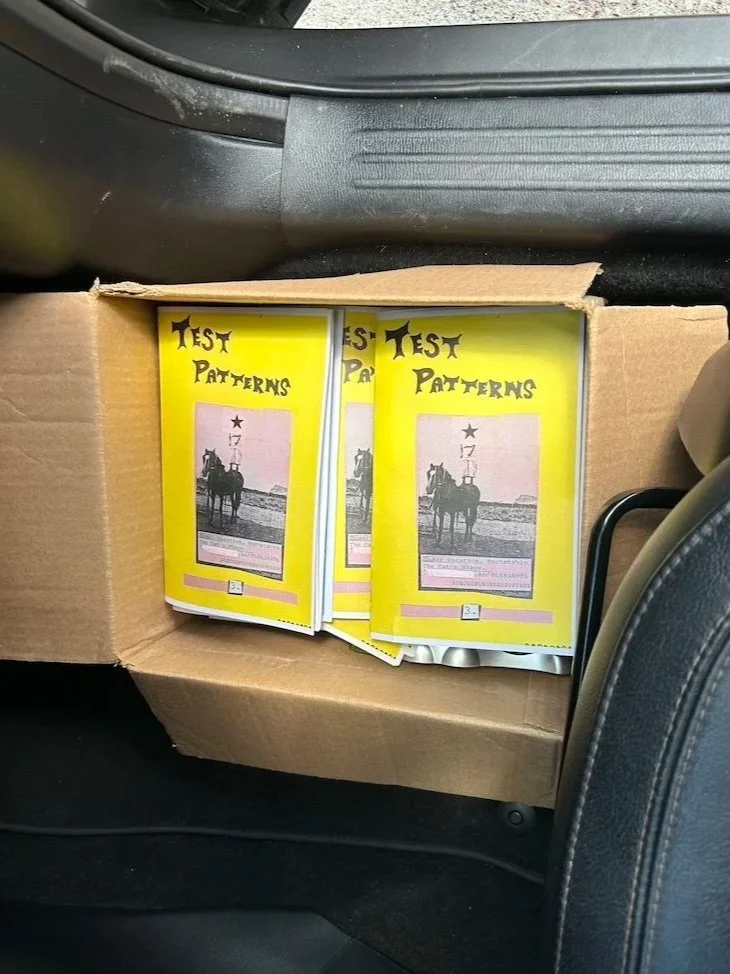
I really like your interview with Jowe Head because even when he was like, all my music got swallowed up by the big corporate capitalist music industry, he’s just like a regular guy. It feels good, because one can relate to it in some way. Just reading his interview, I was like, I'm connecting with this person right now because of what he's saying and how he's saying it. I appreciated that.
LC: Another thing that was very shocking to me when talking to people—both when interviewing and not with the older generation of artists before me—was the things that they had access to. At the time, it's like they were so in love with this form of art that they were making instruments, using tape recorders to record…
Cleaners from Venus is one where it's like, you think this was a band, but in reality it was just Martin Newell doing a lot of it himself, and they never really played live as a band.
Linda Smith, who I talked to at a show—which this wasn't even an interview—she was talking about how she didn't really tour much because she didn't have a band there with her, and she felt a little uncomfortable doing it by herself, but she still was so dedicated to art that she wanted to put it out. Now it's kind of this beloved underground record that is so good, and so many people have been inspired by it.
DF: A real connection to the craft, as opposed to thinking “how am I gonna come across to the world?” and more about “how do I contribute to the world?”
You spoke about access to things—I think about when you were telling me some of the things that you're learning and reflecting on in these interviews. You mentioned once the broader economic issues and concerns that have clearly impacted, in recent years, bands' abilities to tour, or put out records. Is there anything you've learned in your interviews that address these broader issues, or that you've learned from just talking with people about things that we're all going through?
LC: I think that it also plays into the other topic you were talking about, about authenticity, because at least in the modern age, you do kind of run into this problem of, you know—wanting to be a band takes money, and that's just the reality of it. Who is someone who can give you money? A label. But then it's like, are you staying authentic to yourself if you're on a label? Because then, obviously, they take control of some of it.
So some of this all kind of ties in together.
Talking to some of these people about when they went on to labels, and then the label would kind of swallow up their music, and then they'd be kind of left to dry later on—it really is kind of this constant battle between authenticity and just being able to exist as a band. I think that PARKiNG ourselves, we've run into this a lot. We save up our own money from our part-time jobs to then spend it on tours so we don't have to take from our band fund. We don't even pay ourselves on tour, because all of it goes directly to buying vinyl, buying cassettes, buying the shirts, paying for gas—it is all so expensive.
I feel like there is no super simple answer to solving any of it, because it is just the state of the world—it has become so corrupt with money that it's very difficult to exist as an artist, but I think that's where the love for the art has to come into it a lot. I don't think many of us are doing this for the money. I mean, if we were, we'd be doing other jobs.
In talking to artists, we all come to this understanding and respect for each other that we're all doing this, and we attempt to praise each other as much as we can, because we're all trying to be successful in whatever way we think that is, with the help of each other.
Talking to the older generations, it very much is like, you can do this, and you can make a life for yourself out of it, it just might not be the most enriching financially. I think that's honestly what talking to those people has taught me. It's insane the lives that we live—talking to people about tour stories, about the cities they've seen, and the people they've interacted with. You're getting so much more fulfilled from that than you ever would from getting handed a paycheck.
DF: 100%
I was talking to someone recently who teaches art, and they were like, one of my favorite things to teach my students is how their favorite artist has a job…and it's true. I do think that culture in general kind of comes from the bottom up. If we think of the working class as the 99% of people who are exploited by the capitalist class, that's essentially all of us. We're the ones who create culture. So it really comes from the bottom up, and what you're describing is exactly that. That's what the legacy and history of punk is, too. It's interesting to reflect on that, because also what I hear when you describe it…
An artist can have something really cool—this art that is amazing—and it can go one of two ways: either, again, swallowed up by the music industry, where the capitalists just take it over and make it a money-making machine, or it stays with those people who their names might never be as well known but it’s authentic.
Like you're saying, it’s so much more enriching and fulfilling. I've been thinking a lot about the way art is produced from working-class people, and the struggle to maintain it as it is and for what it is.
LC: Another point that I really liked that you brought up in the beginning was this whole social media overtake of the arts. Even in Louisville I've sort of noticed it. Within the local scene, it's definitely died out a bit more than it has in the past, with kids coming to shows. It's because all of us that were in high school at the time, we've all graduated and we're older now, and none of those younger kids kind of took it up. The ones that did kind of died out as bands because nobody was going to shows, and nobody was getting involved in the same ways.
It's crazy to me, because some of these shows that I'm attending, I'm like, this should have a massive crowd of people at it, you know? This is such a moving piece of art, that kids would take away a lot from, and it would inspire people to go start these bands. And then I show up, and I'm, like, one of maybe 10 people there.
This is insane because a lot of the art that is the most meaningful and is the most moving is from these people that are more underground and are more discreet. It's taught me that we have to go look for it. With how much mainstream media has overtaken the world of art, you have to do your own deep diving. The way I got into all the Chicago music and all these Chicago bands was through reading zines. I traded a photoshoot for a zine with the band Friko when I was in high school, and in the zine, because they're from Chicago, it was a bunch of Chicago bands that I'm now friends with.
And you can totally use social media to your advantage. The way that I then found all those bands was I followed them on Instagram, and I reached out to them, and then we would play shows together. But it's very difficult when I think a lot of the stuff out there is very inauthentic, especially within smaller scenes, you know? A lot of these kids want to make it big as a band, rather than honing their craft…
DF: Or genuinely connecting with people.
LC: You have to talk to people. You kind of have to find things that you like so you can then talk about the things that you like with other people that like the same things.
An example of that was, I went to this show a couple days ago for my friends in the band Fishgills, who I did an interview with. It was genuinely one of the most eye-opening interviews I've ever done, because it's just two of them, my friends Callie and Piper, and it's much more performance art than it is just a band or, you know, a show. It's very eye-opening to sit there and watch, because my friend Piper dances and choreographs the whole thing, and then my friend Callie does all the instrumentation behind it. You kind of feel uncomfortable sitting there watching the show because Piper will look you in your eyes for a really long amount of time, will walk through the crowd and kind of shove people, and it feels very personal. You're sitting there, and you're like, woah, I'm really uncomfortable right now, I don't want them to look at me. It's this very crazy atmosphere to be in, but in talking to them about it, because I was always so curious, they were talking about how it’s very much encapsulating this kind of feeling of queer horror; This innate fear of being trapped in your body, and just very cathartic anger. There's a part where Piper's just screaming into a microphone and looking at you…
Piper had said that the reason the eye contact is so intentional is because, they said, I want you to see yourself in me, and vice versa. Even though we are going through totally different things, we can relate to each other in the sense of this uncomfortableness.
It's like shows like that. I would never have experienced that had I not deep-dived. There's stuff like that everywhere happening, and I think that those are the most special shows and the most special bands, and a lot of those bands don't last. You only have a window of time to witness these bands and their greatness. I hope that through these zines, I can get that information out to more people, you know?
DF: Oh, yeah.
LC: I like to interview bigger artists every once in a while, like Martin Newell, but every once in a while I like to throw in an interview with people that I know, and I've seen so many times. I think I've seen almost every Fishgill show in Louisville, because they're my favorite Louisville act, but seeing them progress over time, and seeing that other people get to now hear about them through this, has been very eye-opening, and I think is another really important key part of DIY culture, is showing other people your friends and their art. Building that connection with each other.
DF: That’s why, to me, the self-centering when people are trying to build their brand is so…it almost is regressive. A band exists and becomes so great because it's part of something bigger than itself, it’s not existing in a silo, and it's actually part of a community that supports one another.
Every time I read one of the interviews in your zine, I put on the artist’s music when I would have never heard it before. That was such a fun and nice experience. It's not really impactful to discover one band and put them on a pedestal. It is so much more inspiring to discover a movement, or a web of musicians and artists who are creating something that is bigger than themselves, or contributing to something bigger.
End.