Conversation 15: Conor Lynch
In 1937 the great Paul Robseon gave a speech at a rally for refugee children of the Spanish Civil War, entitled “The Artist Must Take Sides.” In it, he proclaimed:
Again I say, the true artist cannot hold himself aloof. The legacy of culture from our predecessors is in danger. It is the foundation upon which we build a still more lofty edifice. It belongs not only to us, not only to the present generation–it belongs to posterity--and must be defended to the death. May you rally every artist, every scientist, every writer in England who loves democracy.
With a politically tumultuous year ahead and behind us, Robeson’s words feel blatantly urgent. Artists are making a choice, whether they realize it or not, so the question becomes: which side are they taking?
I felt honored to talk with Conor Lynch about his album in-progress. He is an artist that recognizes the task bestowed upon him by the emergent crises of our time. AI, specifically, has threatened the existence of art and artists as cultural purveyors of humanity, which is a threat to the existence of expression of the oppressed, and therefore a threat to a culture of resistance. In the days after my conversation with Conor, I thought about this existentialism. What are we without art from the working class? Without our culture? How else do we hone our creativity and our critical thinking? Or sustain our spirits to put up a fight?
Conor refuses to hold himself aloof. He won’t escape what’s right in front of him, and he won’t preach to the choir on the issues they’re facing. Instead, he insists upon adding his voice to it and becoming part of the unified fold. Artists have a unique role to contribute to a movement: their voices are strong, compelling, and representative of a people, and the same can be said about Conor. His forthcoming album is one I look forward to everyone listening to. Songs like “I Would Kill” with lyrics that outline worsening conditions of working people, that reflect what happens when push comes to shove—this isn’t Conor’s story, but it’s the story of his peers, of a collective struggle, and one which sidesteps the toxicity of individualism while preserving personhood. The rest of his album follows suit.
His latest project won’t be out very soon, but in the meantime you can listen to his past projects online, see him play live somewhere in Chicago, and read what he has to say about his latest music in our conversation below. Enjoy.
-Danielle
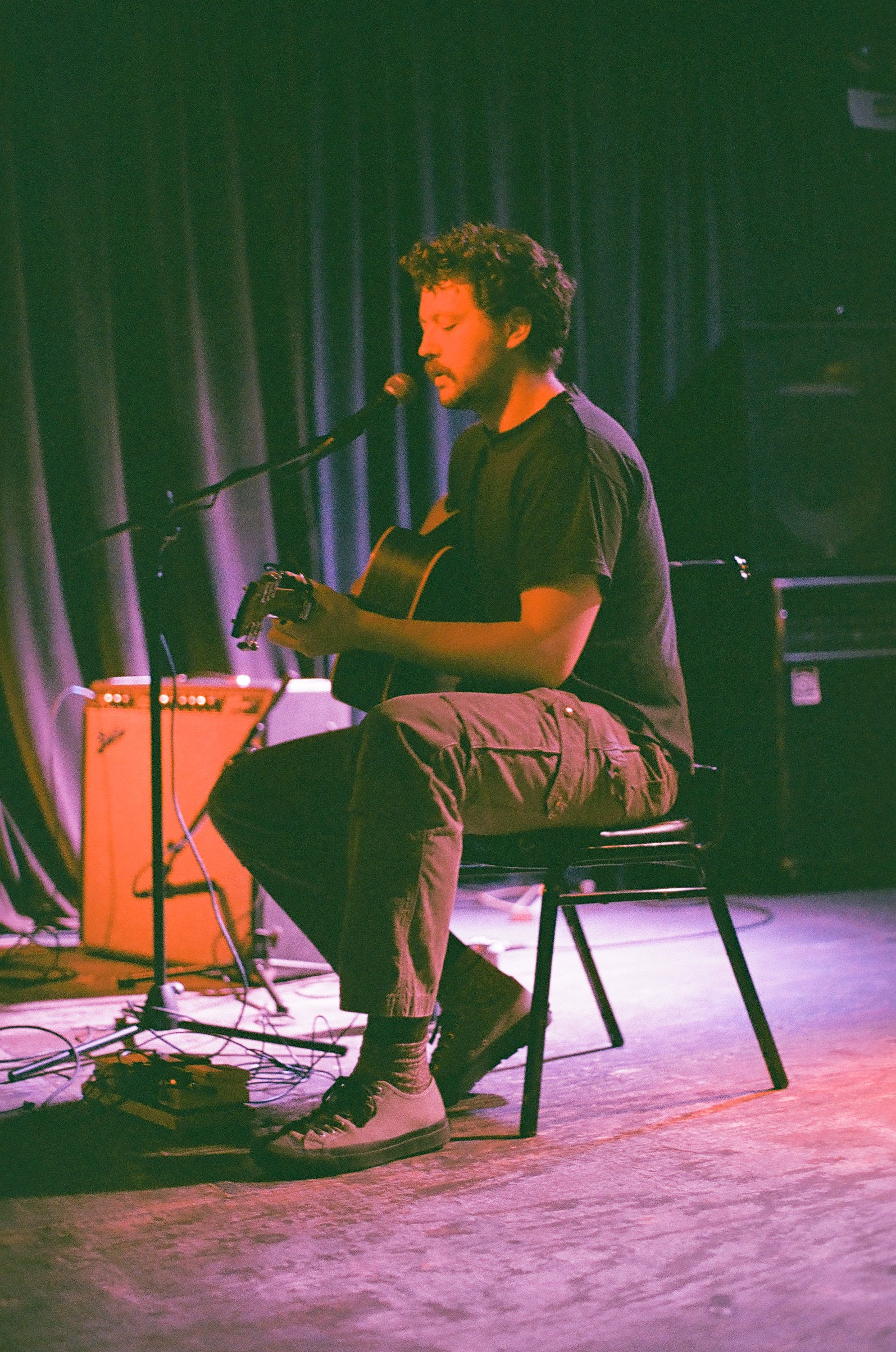
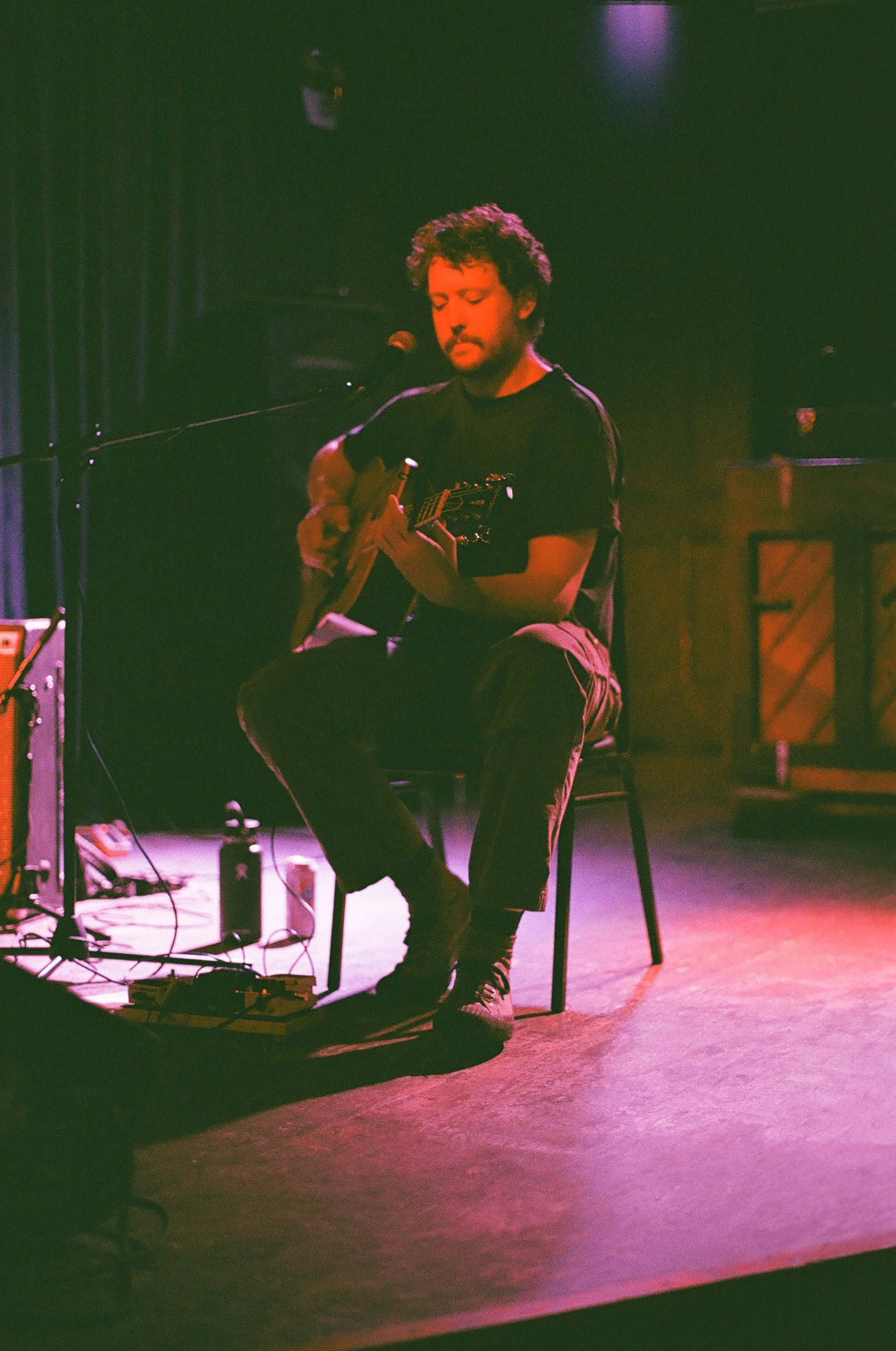
Conor Lynch is a Michigan-raised and currently Chicago-based singer/songwriter. Before moving to Chicago this past fall he lived in Detroit for the previous four years. He is currently playing solo shows around Chicago and in the process of finishing a new album, as well as playing shows with his new project/band “Cabwaylingo.”.
Danielle Francisca is one-half of Nox Library.
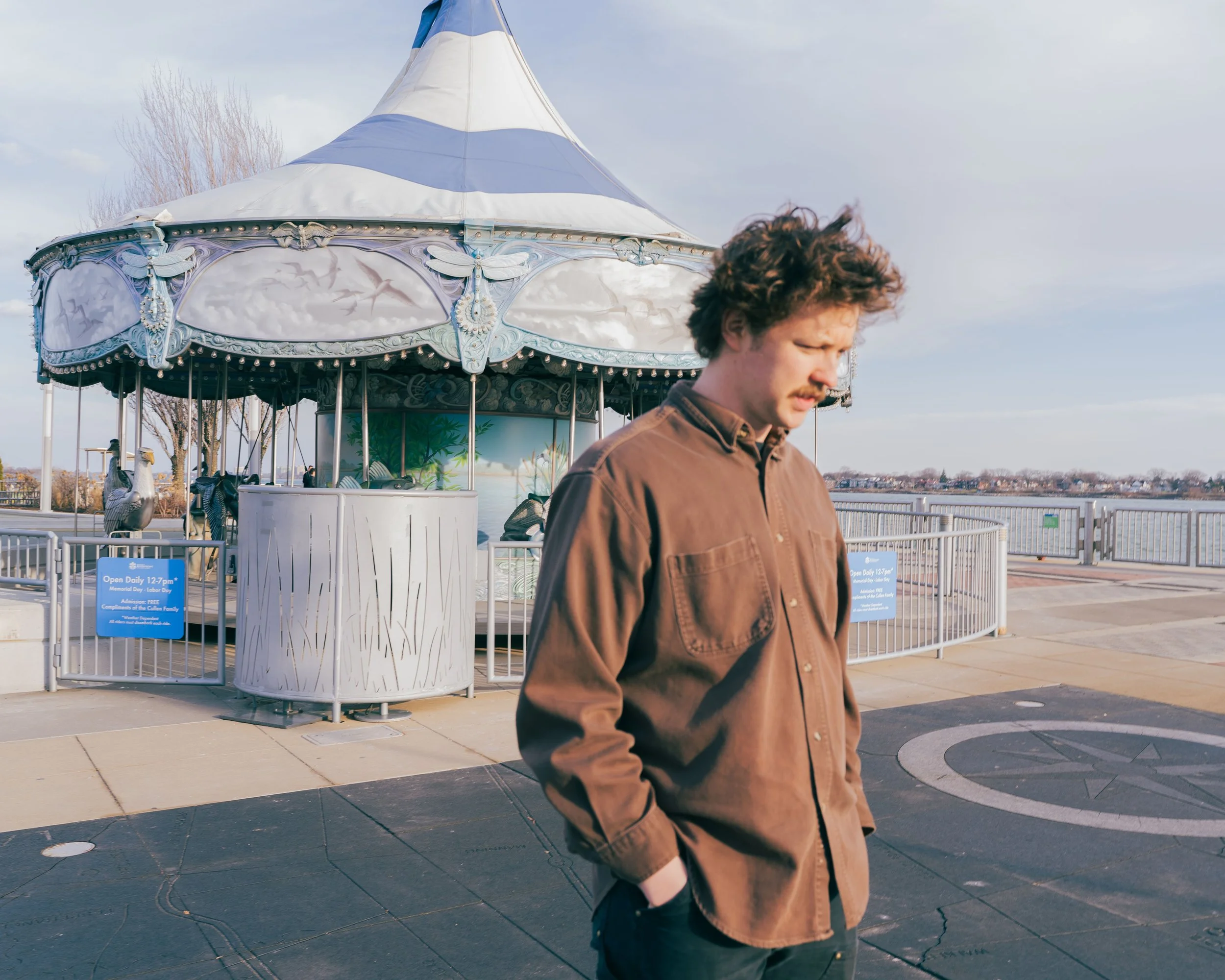
Image courtesy of the artist
Conversation with Conor Lynch, July 2026 (Transcript)
Danielle Francisca: Hey Conor!
Conor Lynch: Hello.
DF: Hi, how are you?
CL: I'm good, how are you?
DF: I'm good. I just dropped Mateja off for his big voyage to Kalamazoo.
CL: Oh, does he… does he have my [Nox] shirt?
DF: No, he forgot it! He did say that he's gonna come back, because they haven't left yet, so he might come back in a few minutes.
CL: Obviously not a huge deal. I can get it whenever, but…
DF: Well, how was your week? Weren't you just performing in Grand Rapids?
CL: Yeah, I had a show in Grand Rapids Friday, and then I had a show here last night.
DF: You sent me your album, but I want to give you a chance to speak on it, because you've been doing a lot of performances recently. I'm assuming it's mostly your newer songs? What are some of the themes that have been coming up for you in your performances and on your album?
CL: This album… It's definitely… I tried to not have it be super personal. I wanted it to be more about larger themes outside of myself. Obviously they're still gonna be sort of personal, but it's not an inward-looking album, whereas I feel like my last one was a bit more…not self-indulgent, but more like the story of just a guy, of a person's journey. This album is not necessarily protest songs, but I wanted them to be political, or just have a greater message than just being pure melancholy.
A lot of my stuff has been that way—more sad for the sake of being sad, I guess.
DF: I know that you say it's not personal, but it feels really personal. Not personal in the way like only you've experienced these things.
CL: Right.
DF: When I listened to it—and even just looking at the title names—it’s personal in the sense that it's something that we all experience, and that we see impacting us at a personal level, but knowing that we're not alone in that. It very much still feels like “just a guy,” but almost in a more general, experientially collective sense.
CL: Yeah, I think that was definitely the idea—trying to be more…speaking about these issues and things that are affecting all of us in a relatable way. I'm not trying to tell anybody how to feel, or be too preachy. I really didn't want to be super preachy about anything.
DF: Which is nice.
CL: I feel like a lot of political music can be like that, or too wordy, and too specific.
I'm trying not to name drop…I mean, this is kind of a very one-sided beef—I don't know if you know the Jesse Welles guy?
DF: The guy on Instagram? Yeah. Like, TikTok or whatever?
CL: Right. So, I really don't like him. I feel like a lot of the songs, or the way I'm approaching them, was almost specifically like, alright, I'm not gonna do what that guy's doing, because it's really obnoxious to me.
DF: Fair.
CL: So that's me being a hater. I definitely wanted to do it [the album] without being like, oh, I'm this super smart guy with a guitar.
DF: “Holier than thou.”
CL: I feel like the way he's doing it, is like this is specifically a protest song. It's very sort of ham-fisted, I guess. I was trying to not do that.
DF: I think that brings up a really great point. I'm sure you've heard the phrase before, “all art is political.”
CL: Yeah.
DF: Thinking about where that gap is when artists actually want to engage with political art, or when people want to engage with political art—I don't think that for art to have a contribution towards a bigger movement, that it needs to be so overtly political. The example you're giving, I think that his lyrics are clearly very political because they're in direct response to very political things. I don't think that in order for art to have some sort of influence or contribution to a broader movement, that it needs to be overtly political, or carry an overt political message. It can outline the experiences of specifically working class people, or the most oppressed people, in a way that makes it a little more relatable and that builds some sort of collectivism or solidarity that people can get behind.
CL: Definitely, yeah.
DF: I heard you talk about some songs where it kind of does get at those working class themes. Are those some of the political themes…or economic struggles, rather…?
CL: Yeah, definitely. The main thing being—like you were kind of alluding to—not being so overtly political in a way where it's like I'm talking about specific events or responding to specific things, because the greater issue and struggle is so much more existential and just ever-present than a specific thing. The concept of wealth in general, and who has it, who doesn't. The way I see it—the true basis of all problems in the world in general—I think that's it.
It seems maybe too simple to boil it down to that, but really I think at the end of the day, that's really all it is. Or at least the very root of everything. So just trying to nail that idea home, like, hey, there's really only one enemy. One group of people—class of people—that is truly the problem, and it's really us versus them. That's who we should be focusing our attention on, or obviously, ideally, getting rid of the people who have all the money—the elite, wealthy people, who have all the money and all the power.
It kind of boils down to “us versus them” in that way. I feel like on some of the songs I'm trying to write from the perspective of the “us” in the sense that we are all together in that struggle. There's different sects or different ways to break that down, but really we are all together in that fight against the people who have all the money.
DF: It's funny because now that we're sitting here talking about your album, it does suddenly sound like this super political work of art. But I will say again that it does feel personal in that it's coming from the perspective of our personal experiences in positions that we're subjected to that are just inherently political as working-class people.
I will say, too—I'm always kind of bringing this up—that the capitalist class is the true enemy here, and within the working class, we have so many different layers of oppression—whether you're a person of color, or there’s gender-based oppression, but the unifying thing is that we all unite around this baseline layer of oppression, which is being working-class.
You used a term earlier, existential, that I have not actually thought about before in my conversations with people, but I think it's a good thing to bring up because when you're in this sort of struggle, there is a really deep element of existentialism in it. Our whole lives are gonna be exploited in the sense that makes us think: do we want to continue to struggle, or do we want to be complacent and give in to it?
There's also the perspective of existentialism as an artist. I don't know how to put this, because, again, I don’t talk about it often, but in thinking about AI, and how AI is overtaking the arts and especially the music industry—thinking about how that is threatening people's existence as artists and people who make real music and not AI music… I wouldn't be surprised if there's some sort of existential struggle that surfaces in that as well.
CL: Yeah, I would say definitely. It's truly just the part of, like, okay, well, what am I doing this for? It's not about the people who truly do it because they feel like they need to. It's the thing that keeps them going and makes them happy. It's not about, like how much money am I getting from this? It's about the process, and the self-fulfillment of being like, okay, here's something that I created that I can share with people.
Seeing in interviews the way that these AI people talk about art—and I guess specifically music—there was one that went somewhat viral, where some guy was like the process of making music isn't really even enjoyable anymore…
DF: Oh my god.
CL: I was just like, dude… it's that sort of thing where it's like, no, that is kind of the only thing that is enjoyable.
Just thinking personally: I have been playing a lot of shows, and even playing shows has kind of not been that super enjoyable for me lately. I feel like I need to take a break from it while still writing and recording and getting those ideas out of what I'm hearing in my head. Doing it myself and putting it into song—recording things, layering tracks—that is genuinely the most enjoyable thing that exists to me. If I could just do that all day, every day, I would be so fulfilled.
That goes for AI, all kinds of applications of it. In terms of generative AI, where the final product is this final thing and it doesn't matter how it was created, it's just like, well, here it is—there's no feeling or soul behind it. It's so empty.
DF: I forget who it was who came out with this, but it’s a database where you can check if your music was used to train AI.
CL: Yeah, my stuff is in there.
DF: Really? Oh my god.
CL: A lot of it. There's some kind of class action lawsuit…
DF: Where would they have gotten it from? Bandcamp? Or…
CL: I think a lot of it was from YouTube, maybe?
DF: Mmm… it's Google.
CL: Yeah.
DF: That makes a lot of sense, and I think when you upload anything to Google, they own it in some sense.
CL: Right, even Google Docs and Drive and stuff, I think.
DF: Which is terrifying. I know Mateja always tells me his idea, of which I agree, that once you create art, and once you put it out there, it's not only yours anymore. But the idea of it being used for something by a big monster of a corporation like Google, just for AI to create more monstrous AI entities…you almost become disconnected from your own art. I think that when you give your art to the world, you don't really become disconnected from it, it just becomes something that everyone can connect to, but there's something about it being overturned in an AI model with these big companies—it's like suddenly you're alienated from your own art. I can't imagine how that wouldn't make you feel existential.
CL: Yeah, definitely. Like you're saying, like Mateja was saying, I think that's true in the human aspect. The art is no longer yours, as in it’s free—people are free to interpolate it, or take on whatever they feel that it means. Especially with lyrics. I think if a listener can take on a meaning that works for them from what you're saying, when that wasn't what you intended, I think that's cool.
With it being not yours anymore, but now it belongs to a machine—it's just so inhuman. It's so unnatural.
With AI, I'm just so opposed to it from an existential point, from purely “I want nothing to do with it on any aspect,” because it's just so not human. It's soulless, and I just don't want to give anything to the robots. I like people, I like humans. I don't really believe in any sort of application that takes the human element out of things, because, again, that's all we are. That's all we have.
When you're giving up parts of yourself to an algorithm…computers are just zeros and ones, and I'm not sure how to eloquently put it, but I feel like you… you know what I mean,...
DF: Yeah, it's defeating.
CL: It is, yeah.
DF: Especially with how it's implemented right now, and how it's growing right now. It's purely meant to be a profit strategy. Even with music it's meant to not have to pay musicians and artists, whether it's within an advertising agency, whether it's for the score of a movie, or whether it's just for YouTube to give their video content creators different music choices—all of that will just be AI music one day. The idea behind that is to save money for these billionaire, trillion dollar companies, and their board members.
So it is soulless, because it is further alienating artists from their own work, or from their role in the world as artists, and pushing them more and more into their role as workers in the world. Don't create art, just focus on what you can do to be productive towards some sort of profit margin, for the bottom line.
Warner Music—they sued some of these companies, and then their settlement was a partnership with them. Aren't most labels only part of one of the three big labels, like Warner? Or is that…
CL: Certainly the bigger ones, and even the bigger independents are. Pretty much any label that has the funds to actually give you a manager, help you tour, have PR and press stuff—probably any of those labels would be owned by some bigger conglomerate. But I mean, there still are a lot of really cool, smaller tape labels, DIY labels…
If you're talking about more legit labels, then yeah it's like Atlantic, Warner, Sony…
DF: I was thinking about that because I think about what can be done. You mentioned DIY labels…I know you're in Chicago—how do you see people turning to alternatives that can help their music grow, and for them to continue to connect with other musicians and audiences without having to depend on some conglomerate that will, in turn, give their music over?
CL: I definitely do see a lot in Chicago, and it's usually younger people, like 21, 22-year-olds. I feel like a lot of them are doing a really good job creating analog art. They're still doing zines, putting on DIY fests, and stuff like that…going to shows and being anti-Spotify. I know a lot of artists in Chicago have taken all their music off of Spotify. There was a big Chicago collective to do that.
It is tough, because I know some artists who have been like, we're not gonna put our music on streaming at all, it's just gonna be on Bandcamp and YouTube, because those seem more free, but in a good way, where it's like I don't care if I'm making money off this, I just want people to hear it without having to use Spotify or Apple Music. Then it's like, well, maybe YouTube isn't good either, because even though it's accessible to everybody, are they selling or giving away the music to an AI thing? Maybe Bandcamp's doing it as well…
It does feel hopeless in a way. What’s an alternative? I feel like everyone's waiting for a true alternative to pop up. There was Nina, and they already [shut down] because they weren't making money. They were on purpose not trying to be profitable and then they folded, so…
That's pretty depressing, too, even though I didn't really use the service, but I was like, damn, that was kind of an admirable idea, and it didn't work.
DF: It’s like reform or revolution, right? Will that alternative really appear under this economic system that tries to make a profit off of everything, while killing any attempt at making something that's a little more accessible and more aligned with what people want and need?
Or does there need to be an actual overhaul of the system, or working towards policy change and things like that? I know Rashida Tlaib introduced the Living Wage for Musicians Act, and that's a real material thing that could be implemented, but of course that's not the only answer. That's not the thing that's gonna solve everything. I think that feeling of existentialism and defeatism comes in all sectors of the arts and the working class in general.
CL: I guess with that—going back to the album—with that sort of defeatism, my response, or what I imagine is a more tangible sort of revolution, or some sort of actual physical response—an uprising kind of thing. To me that seems like the only sort of option at a certain point.
But then again, I'm not really actually doing anything about it to get to that point. The music is the way that I'm trying to do my part, even though it's maybe not very substantial. But if I can at least get more people on the same page as me, or just think in that mindset, like, okay, what do we actually need to do to fix some of these things?
I feel like that's what I was trying to do with the lyrics, just kinda get that idea out there, and normalize thinking about it in that way.
DF: When do you anticipate your album coming out?
CL: So, next year?
DF: Are you gonna release any singles?
CL: Yeah. Cam Frank is recording and mixing this stuff, and there's a song that's almost done being mixed that I'll put out as a single probably pretty soon. But, I mean, it won't be a single and also announcing the album. It'll be pretty far before the rest of the project.
End.